Why reading and writing is the road to happiness...


This blog started years ago as a place to muse on the life projects keeping me entertained. It is no surprise then that it has morphed into a blog about my reading as that has been my lifelong project. Here I review lots of different types of books, with an added focus on Australian women writers. Hope you enjoy - feel free to contribute to the conversation!

Tuesday, 9 December 2014

Book Review: 'Hades' by Candice Fox (No 21: Crime)


I bought a copy of Candice Fox’s debut crime novel ‘Hades’ after I saw Fox was going to be speaking at my local library: unfortunately I didn’t get to the talk but I did read the novel which won the 2014 Ned Kelly Award for best debut crime. It is indeed a good debut and certainly a plot that demands attention due to its enigmatic characters and grisly murders. ‘Hades’ is the nickname of Heinrich Archer, a huge man who presides over a tip in the Western suburbs of Sydney, where criminals come to dispose of collateral damage. Interrupted by a stranger at his door one night, we meet Hades at the opening of the novel: ‘he was squat and bulky like an ox, power and rage barely contained in the painful closeness of the kitchen’. The stranger wants to offload two small children, whose presence in a bungled kidnapping has become a big problem for some inept crims: they have heard that Hades can ‘fix problems’. And so we are introduced to the back story of Detective Eden Archer, and her brother Eric Archer. The first person narration however, is done through fellow detective Frank Bennett, Eden’s new partner: this outsider point maintains Eden’s mysterious persona, and gives this crime thriller something a little bit fresh.
Eden’s story is drip fed through Frank’s observations and the flashbacks in third person describing Eden’s childhood from her adopted father Hades’ point of view:
‘Eden was a quiet and mysterious child. She kept secrets that he could find no sense in keeping – like where she had been for hours at a time, even if she was only down at the sorting centre helping to fold clothes or over at the gate watching the morning crew arrive. She sang quietly to herself. She did anything Eric asked of her, dropping whatever she was doing to follow him out into the mountain of trash. But she had agency of her own, despite her obedience to her brother. When Hades went to his shed she would be there trailing behind him, strangely frightened that she was unwelcome in his workshop. She would watch him for hours as he sketched and experimented with his sculptures’.
Hades, is in fact, a very interesting character and his home, a huge house filled with broken dolls and towering piles of books, surrounded by scrap metal sculptures made by Eden, is vividly depicted. Frank’s story is more standard detective genre fare: divorced, hiding a dodgy record, and already rubbing Eric the wrong way in the office. He’s a likeable character though: ‘I felt the desire for violence flex in me. A long breath eased through my teeth. I wanted Eden to trust me, as her partner and as a man. She was weird but I liked her. Eric was the predictable catch that came with having a dangerously beautiful and darkly mysterious woman fall right into your lap. I could handle him. He was a prick, a prick with knowledge of my past, but I’d dealt with plenty of pricks in my time.’
We learn little of the killer’s back story but to say anymore would be spoiling the plot. ‘Hades’ has a gruesome premise, and doesn’t hold back in describing fairly cold and ruthless activity. In this way, and coupling with the deliberate mysterious treatment of central characters, elements of ‘Hades’ are over the top: I’m assuming that this is intentional and the aim was to create a hyper dramatised page turner.
Fox writes with confidence and the dialogue and references to police procedures were fine. Like P M Newton’s crime novel ‘Beams Falling’ I reviewed earlier in the year, this novel is set in Sydney, and again I’m pleased to see Sydney used as the backdrop to a detective procedural. Fox’s bio says she hails from Bankstown and she uses little pockets of Sydney that don’t get glamorised very often in Australian literature, Mortdale being a fine example. It’s good to see Western Sydney getting a look in again, like in Luke Carman’s ‘An Elegant Young Man’ I also reviewed this year.
Fox’s next novel has just been released and is titled ‘Eden’ thus suggesting that we are to learn more about the damaged, tough, raven-haired detective. I’m sure Fox will find a committed following for the series.


 *This review is part of the Australian Womens Writers Challenge 2014


http://australianwomenwriters.com/


http://auswomenwriters.files.wordpress.com/2013/12/awwbadge_2014.jpg

Wednesday, 26 November 2014

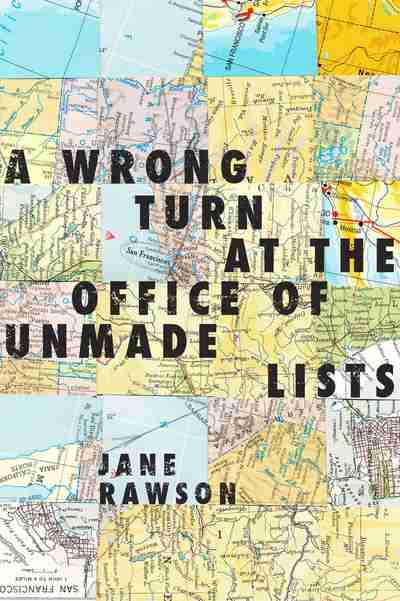
Book Review: 'A Wrong Turn At The Office Of Unmade Lists' by Jane Rawson (No 20: Fiction)


Jane Rawson’s 2013 novel ‘A Wrong Turn At The Office of Unmade Lists’ defies easy description. Its genre is indefinable, the plot ambitious, and the characters unusual, and yet familiar at the same time. It is no surprise then that this release by small press publisher Transit Lounge was recently awarded the 2014 MUBA, ‘Most Underrated Book Award’ judged by a collection of Australian indie publishers. The complexity of material in the novel deserves close attention, and hopefully the publicity surrounding the win will bring Rawson a wider audience.
‘A Wrong Turn At The Office of Unmade Lists’ begins in the future, a fairly bleak Melbourne, where the rivers are polluted, survivors live in humpies, and the UN patrol the camps giving aid to those trying to eke out a living. We meet Caddy, who has lost her home and her husband; she sits in a bar by the river, negotiating deals with the street kids around her, and musing on the short story she has been writing while she whiles away the hours:
‘At the Newell settlement someone had been cooking fish on a fire. It smelled good, but she’d learned a long time ago that she didn’t have the constitution for river fish. Instead, she’d pulled a pack of oat bars from her humpy. Man, she needed to find some work’.
Caddy’s mate Ray is also trying to survive in this grim world, and he enlists the willing Caddy to sleep with clients who still have money from some undisclosed source of business. Rawson paints the future Melbourne evocatively: the environment is ruined, disease is rife, the Internet is still ruling people’s lives but is essentially useless in providing what everyone wants, food and fresh water. Rawson’s vision of the future is depressingly easy to believe but at the same time vividly imaginative:
‘These days, navigating the smeared platforms and dismantled escalators of the City Loop settlement stations was a much bigger worry than terrorists. Thousands of people lived in the three underground stations, with no water, no ventilation and noone clearing anything away, ever. Elsewhere in the city settlements took care of themselves, kept things clean, looked out for each other. But for some reason the City Loop had attracted the worst down-on-their luck transients, the most mentally ill, the creepiest scanners, the fallen-from-favour cops and bouncers, tough guys and reprobates always assuming someone else would clean up after them, never doing a thing for themselves.’
We exist in Caddy and Ray’s world for a while before Ray takes a detour and stumbles across some printed maps amongst the junk piles and they pique his interest. And so it is the maps that lead us into the strange world of the ‘suspended imaginums’, and we are to learn through a mix of Ray’s travels and a sub plot concerning two new characters Sarah and Simon, that we have entered Caddy’s unfinished short story. Rawson enters meta territory, and Ray’s introduction to the Office of Unmade Lists with its curious employees is reminiscent of the film ‘Being John Malkovich’ or the absurdity of classic ‘Hitchhiker’s Guide to the Galaxy’:
‘’No maps, bud. Look, this is Shadow Storage and Retrieval. Head over that way’, she pointed left, ‘and you get to Suspended Imaginums. Past that, Imaginum Incubation. To your right, Odd Socks, then Tupperware Lids, the coffee shop and gift store, then Partially Used pens, then Remotes, then Lost Oddments. Unmade Lists have just set up their own Office, but they’re still waiting on funding for equipment’.
The dialogue in this section is witty and droll, perfect for the scene Rawson is setting. The plot becomes more complex, the narrative moves between third and first person, and time moves between past Australia and future Australia. Rawson is ambitious in her structure and voice, whilst maintaining coherence and pace. I did think the earlier sections in future Melbourne were more confident, less dialogue driven and more purposeful. However, the latter sections no doubt were what captured the attention of the MUBA judges: their scope and imagination make this an unusual and worthy read.


*This review is part of the Australian Womens Writers Challenge 2014

http://australianwomenwriters.com/


http://auswomenwriters.files.wordpress.com/2013/12/awwbadge_2014.jpg

Sunday, 16 November 2014

Book Review: 'Whiskey Charlie Foxtrot' by Annabel Smith (No 19: Fiction)


Annabel Smith’s 2012 novel ‘Whisky Charlie Foxtrot’ explores two of life’s mysterious phenomenon: identical twins and coma. The title refers to twin brothers, Charlie and William. After a childhood friend’s Air Force father teaches the boys to use the military alphabet on their walkie talkies, William becomes Whiskey to complement his brother’s already apt name. Charlie is the more reserved of the two, Whiskey the adventurous, popular one. He’s slightly older, slightly taller, slightly better at golf, slightly more memorable in the playground. It is the slight edge that sets the two apart in a lifelong struggle for independence from the other. Charlie hopes that the family move from England to Australia when they are teenagers will give him a fresh start but his hopes are dashed. Whiskey is a hit in the new high school and he’s soon seeing the most glamorous girl in the year, Anneliese. That is until Charlie is assigned as Anneliese’s dance partner in the lead up lessons to the end of year ball and his foxtrot starts a series of events to gradually destroy the boys’ relationship:
‘Sure enough when Charlie got home, Whiskey was waiting for him, lying on his back on Charlie’s bed, legs crossed, arms behind his head.
Well, you’ve really done that dickhead Randall proud, he said, without even looking at Charlie.
How’s that? Charlie asked warily, putting down his schoolbag.
You’ve got the cunningest foxtrot going, Charlie. You certainly know how to steal another man’s chicken.’
The novel moves between the present and the past; we are told early in the piece that the adult Whiskey is in a coma after being hit by a car, and as family members come to the hospital we piece together the events that have lead them to the present. We learn the story of how another girlfriend comes between the adult Charlie and Whiskey, ‘Juliet, however was not like Whiskey’s other girls. She was a beauty, that part was true’ and how Whiskey’s travels through Peru lead him to a wife Rosa, who is a surprise to the family, and is a catalyst for bringing the brothers back into contact, ‘You and Whiskey are brothers, Charlie, she began. You are family, whether you like it or not. And your family is never going away’.
There are other revelations in the novel which thread the two way alphabet into the narrative, and while this conceit could have been twee, Smith has a deft touch, and the serious nature of the novel’s premise allows the concept to feel clever rather than naff. Smith understands the inner workings of families, and I think her portrait of Charlie was honest and unflinching: he’s not a very pleasant character at times. She shows us in Charlie the flaws that we have all fallen prey to in life: petty jealousy towards siblings and romantic rivals; fear that manifests itself as failure to take action; and fear towards major life commitments. I also thought Smith’s exploration of the hospital environment and the medical staff a family meets during the recovery period rang true. My grandmother recovered from a significant period in a coma and the emotional journey of the characters, described by Smith, was deeply relatable for me.
This is a very fine novel on what it means to be part of a family, and how we can grow from the intense but immature feelings of our youth into a more nuanced person in adulthood.

*This review is part of the Australian Womens Writers Challenge 2014

http://australianwomenwriters.com/

http://auswomenwriters.files.wordpress.com/2013/12/awwbadge_2014.jpg

Friday, 14 November 2014

Book Review: 'Return To Coolami' by Eleanor Dark (No 18: Classic)


Return to CoolamiFor my latest classic Australian text I picked up a copy of Eleanor Dark’s 1936 release ‘Return to Coolami’, re-released as part of Allen and Unwin’s House of Books collection. It was on the ‘recommended reads’ shelf at Berkelouw and I was pleased to have it bought to my attention: my mother, with her maiden name of Dark, has been telling me for years that we are related to Eleanor, and she would point out Dark’s plaque on the boardwalk of Circular Key when we walked over it. Alas, last year I looked up Dark’s biography, and of course Eleanor had married into a Dark family and they were from America I believe, not from Germany as was our family. I had hoped to leverage off my literary celebrity there, but it’s not to be: instead I have read my first novel from her body of work just for pleasure, and am pleased that I did.
This very much reminded me of my reading of Harrower’s ‘In Certain Circles’ in that so much of our literature from the first half of the twentieth century was consumed with analyzing the impact of the wars on those who returned and those who had waited at home. This novel focuses on three marriages of varying stages: Brett and Susan who have been married for a year, Susan’s parents Tom and Millicent who have been married for decades, and Susan’s brother Colin and his wife Margeryy who have little children and live out in the country. The novel opens with Brett and Susan arguing about the direction of their marriage before joining Tom and Millicent, who are to drive the younger couple from Sydney back to Brett’s farm Coolami. On the way they will stop overnight at Colin’s farm, before driving a second day to their destination. This is the full scope of the plot, but Dark drip feeds us information as the narrative develops: Susan has lost a baby not long after the birth and we are soon to find out that it was not Brett’s child.
The long car trip allows Dark’s characters time to reflect on their relationships and Susan has a particularly complicated recent past to contemplate. She had been in a relationship with Brett’s brother but had not been able to get past a fondness to actual love:
‘Because love still hadn’t come, but it was harder than she’d expected to retreat in good order. The tormented misery of the young man she wasn’t in love with had become in the end as strong a tyranny as love itself. She was confused by it, vaguely frightened, desperately sorry for him. But not contrite, not remorseful. Never that. She hadn’t pretended. She hadn’t promised. She had denied and still denied responsibility’.
Brett similarly has his mind on the relationship, with the spectre of his brother Jim always clouding his frank interactions with Susan:
‘He put his pipe in his pocket and stood up. “It’s no good Susan”. He looked down blackly at her impassive face and lowered lashes. “We always end up with a row – bickering, hurting each other accidentally or deliberately, insults – other things”. He paused for a moment. Each of them in the rough, pebbly ground beneath their eyes, saw a long procession of unlovely incidents – of words forged by their speaker’s pain into instruments of torture, of actions twisted with the inspired ingenuity of mental suffering, into veritable nightmares, of kisses like blows and caresses rotten with a taint of cruelty’.
Tom and Millicent worry for their children, but more notably feel a shift in their relationship as they see their youngest off to married life. They are in their late fifties and wonder what role they now play in society, no longer parents but too used to being responsible to start afresh with adventure in retirement. The fourth relationship in the novel is that of city to country, as Millicent looks back on her move from her childhood home Wondabyne to live in Sydney with city boy Tom with some regret, and envies her children who have returned to large properties in the country out of some ancestral yearning. Landscape is dramatically imagined during the travelling party’s stops from the Blue Mountains into the wider New South Wales countryside: ‘High cliffs and tangled gullies dwarfed into deceptive flatness by the great expanses round them. Savage country, all but unknown, drowned in its mysterious and ineffable blue’.
Margery and Colin’s relationship is given the least focus of the partnerships but Colin’s mental state, affected by his return from the war, provides the catalyst for the shift in dynamics at the close of the novel. Like Harrower, there is a confidence with Dark’s writing, and an intelligent understanding of the inner workings of both women and men. I thought this a very modern feeling novel, which is high praise given its 1930s release. Some of the issues raised in the portrayal of Susan are strongly feminist although of course, this period was a time of monumental change for women. In the early chapters of this novel I was concerned that I would find it hard to keep caring for the characters to finish reading, but I think the novel becomes much more engaging after the midway point, and the resolution was quite charmingly romantic. After reading this very fine novel I feel even more disappointed that I’m not descended from Eleanor’s line. It would be a very impressive lineage.

*This review is part of the Australian Womens Writers Challenge 2014


http://auswomenwriters.files.wordpress.com/2013/12/awwbadge_2014.jpg