Why reading and writing is the road to happiness...


This blog started years ago as a place to muse on the life projects keeping me entertained. It is no surprise then that it has morphed into a blog about my reading as that has been my lifelong project. Here I review lots of different types of books, with an added focus on Australian women writers. Hope you enjoy - feel free to contribute to the conversation!

Friday, 8 August 2014

Reading Challenge 2014

In a previous post I wrote about how, in August 2011, I had started writing down the titles of the books I read in order to keep track and to remember. Unfortunately, having a weird competitive nature, I noted that in those first 12 months, August to August, I read 30 books (both non fiction and fiction) so the next year I wanted to beat that total. As I noted in the earlier post, it was like an adult 'Premier's Reading Challenge'. So in 2011, I read 30 books, in 2012 I read 32, and now in August 2013 to last month I read a bumper 53! What changed? I'm not working full time, I stepped up the reading merely because I wanted to read more, and... my niece told me that her Year 9 English teacher bet the class that they couldn't read 52 books in a year and my niece was out to prove her wrong - and I naturally wanted in, so read like crazy in the last few months to get over the line. Maybe a few novellas were included to speed me up a bit, and I may have put down Catton's 'The Luminaries' because it would have sucked up too much time (I'll return to it, I promise). Anyway, I was thrilled to get to the 52 and snuck and extra in before the month was over.
I blog about some of the books, not all, due to time. So here is the list from this reading challenge:
1. 'The Lost Boy' Camilla Lackberg
2. 'Tampa' Alissa Nutting
3. 'Let's Pretend This Never Happened' Jenny Lawson
4. 'Beautiful Ruins' Jess Walters
5. 'Night Games' Anna Krien
6. 'Man Vs Child' Dominic Knight
7. 'Murder and Mendelssohn' Kerry Greenwood
8. 'Murder In Mississippi' John Safran
9. 'All Good Things' Sarah Turnball
10. 'The Signature of All Things' Elizabeth Gilbert
11. 'just_a_girl' Kirsten Krauth
12. 'Lionel Asbo' Martin Amos
13. 'Burial Rites' Hannah Kent
14. 'Sea Hearts' Margo Lanagan
15. 'Moranthology' Caitlin Moran
16. 'Banana Girl' Michele Lee
17. 'The Son' Phillip Meyer
18. 'Letter to George Clooney' Debra Adelaide
19. 'The Narrow Road to the Deep North' Richard Flanagan
20. 'The Spare Room' Helen Garner
21. 'Mateship With Birds' Carrie Tiffany
22. 'The Fence Painting Fortnight of Destiny' Meshel Laurie
23. 'Forgive Me Leonard Peacock' Matthew Quick
24. 'The Dinner' Hermon Koch
25. 'A Fair Maiden' Joyce Carol Oates
26. 'The Casual Vacancy' J K Rowling
27. 'The Perks of Being a Wallflower' Stephen Chbovsky
28. 'Like A House on Fire' Cate Kennedy
29. 'Beams Falling' P.M.Newton
30. 'The Circle' Dave Eggers
31. 'Coraline' Neil Gaiman
32. 'How To Be A Good Wife' Emma Chapman
33. 'A Beautiful Place To Die' Malla Nunn
34. 'The Husband's Secret' Liane Moriarty
35. 'The Mysogyny Factor' Anne Summers
36. 'The Night Guest' Fiona McFarlane
37. 'Blue Nights' Joan Didion
38. 'The Women In Black' Madeleine St John
39. 'We Are All Completely Beside Ourselves' Karen Joy Fowler
40. 'The Mistake' Wendy James
41. 'The Poet's Wife' Mandy Sayer
42. 'Just Business' Ber Carroll
43. 'Tiddas' Anita Heiss
44. 'An Elegant Young Man' Luke Carman
45. 'All The Birds Singing' Evie Wyld
46. 'The Promise' Tony Birch
47. 'This Is How You Love Her' Junot Diaz
48. 'The Ocean At The End Of The Lane' Neil Gaiman
49. 'Things We Didn't See Coming' Steven Amsterdam
50. 'The Jade Widow' Deborah O'Brien
51. 'Two Boys Kissing' David Levithan
52. 'The Tea Chest' Josephine Moon
53. 'The Cuckoo's Calling' J K Rowling

Book Cover: The Night GuestWhen you write down the titles you can also analyse your style and pull: I read WAY more female authors than males, I am swayed by award winners, I have read quite a few reviewed on the ABC Book Club, and I read a lot of short story collections this challenge. Obviously, by reviewing for the Australian Women Writers Challenge I have read a lot of Australian authors as well, but I naturally gravitated to local authors even before the challenge.
So, to pick my favourite ten: (in no order) Night Games; The Signature Of All Things; Burial Rites; Sea Hearts; Moranthology; The Spare Room; Like A House On Fire; The Night Guest; We Are All Completely Beside Ourselves; The Narrow Road to The Deep North. Most impact on my psyche? The Night Guest by Fiona McFarlane (debut novel, Stella Prize shortlist).
But I can say that I enjoyed reading everything on this list and  believe that there were few off notes in any of these books. Some were flashier than others but sometimes less flash is what you need. I'm intentionally trying to expand my dipping into genres (as you can see, no sci fi here - and there may never be...), and particulalry trying to read some lighter stuff as well rather than getting too caught up in prize winners and critical successes.
For the coming twelve months these are the goals: beat the 52, try to blog about most of them, keep trying new genres and writers, a few more non fiction this year, and continue supporting Australian women writers. And now I'll be noting the number of the book and the type of text so the challenge can be public!

Sunday, 3 August 2014

Book Review: 'Girl Defective' by Simmone Howell (No 1: YA)

Girl DefectiveI absolutely loved 'Girl Defective' by Australian writer, Simmone Howell. I picked it up because I had noted it when it was reviewed on release last year, and I liked the play on words in the title. First impressions a chapter in was that the protagonist, Sky, and her father and brother Gully were too quirky, and that the novel would descend into a cliched 'we're outside mainstream society but the cool kids will accept us by the end' YA plot. Pretty quickly I realised that there was something more special here, and I really ended up loving all the characters in Howell's novel.
Sky's mum has left, leaving her alone with her beautifully eccentric younger brother and her 'stuck in the past' father; they own a record shop, doing it tough in the face of the digital world. Sky has fallen in with older St Kilda local Nancy, who appreciates Sky's retro life; Nancy lives life large, much to Sky's admiration and envy: 'After that, the pilot was lit. Nancy's presence gave Mum's stuff meaning. She got it - that everything old was good. We were retro girls. We listened to old records; we read old books. We watched old movies... I did wonder about lots of things but there was one thing I knew: when Nancy wore my mother's clothes, she looked fucking beautiful'.
The plot is constructed around the mysterious death of local teenager Mia, whose brother comes to work in the record store, and becomes an important presence in Sky's summer holidays. At the same time, Gully's obsessive interest in amateur sleuthing adds to the detective theme in the novel, and his dispatches to the family regarding his investigation of a vandal's attack on the store are truly delightful: 'The subject doesn't know his height but I would pick him at six feet. He is caucasian, has dark hair that could use a cut and he wears black-rimmed glasses. A casual dresser, he was born and educated in Adelaide, the city of churches and serial killers.' The novel is a lovely ode to St Kilda: 'I could live without the tourists but there were things I loved - like the palm trees and poppy seed kugelhopf; like the monster goldfish at the botanical gardens and the sad song of the marina boats. The wind played their masts like a bow on strings and the sound was eerie and lovely and more lonesome than anything I could imagine'.
'Girl Defective' is not afraid to touch on darker adult issues, and explores the relationship between a single dad and a teenaged daughter realistically without too much saccharine. I liked how it was clear to Sky that she and her family were 'different' and that she had mixed feelings about wanting to be more maintsream but at the same time relishing that they were left of centre. The coming of age romance was nicely developed, and the end resolved well. My only concern is that with all the references to seventies and eighties music, as Sky and her father delve into the record store's treasures, YA readers might be lost to the soundtrack that is created by the plot. I could 'hear' all the tracks as Sky put them on her turntable; but maybe it would encourage a younger reader to google eighties gold such as 'Hold The Line'?
It is clear that Simmone Howell has a fantastic 'voice' for YA: I missed Sky's voice as soon as I finished the novel. You can't get a better recommendation than that.

*This review is part of the Australian Womens Writers Challenge 2014


http://auswomenwriters.files.wordpress.com/2013/12/awwbadge_2014.jpg

Saturday, 2 August 2014

Book Review: 'The Cuckoo's Calling' by Robert Galbraith

It's such a shame that J K Rowling's pseudonym 'Robert Galbraith' was outed so early in the piece because I would have been interested to have read more 'blind' reviews of 'The Cuckoo's Calling'. As it happened, the crime debut received a few reasonable reviews before the big news was let out by a publishing insider, and the book became a best-seller. After reading Rowling's 'The Casual Vacancy' last year, and enjoying it immensely, I had her crime novel on my 'to read list': with the second in the series just released I decided I better hop to it to see if the hype was warranted. Without any attachement to the Potter series, which passed me by, I really do enjoy Rowling's writing style. Her characters are eccentric enough to be interesting and charming, but not unbelievable: her protagonist, Cormoran Strike "had the high bulging forehead, broad nose and thick brows of a young Beethoven who had taken to boxing, an impression only heightened by the swelling and blackening eye".
Rowling's use of dialogue is the clincher for me, realistic and appropriate, her portrayal of all levels of society in Britain ringing true: "When ya gotta driver it don't matter, does it? You jus go wherever you want, don't cost you nothing extra, you just get them to take you, don't ya? She was passing so she come in to tell me that she wasn't gonna stop because she 'ad to get 'ome to see fucking Ciara Porter".
I find myself smiling at her descriptions of people and situations, her use of humour understated but always present. Like 'The Causal Vacancy' which skewered middle class village life through a satire of the parish council, 'The Cuckoo's Calling' makes barbs at the world of fashion modelling and the cult of celebrity, with its murder of top model Lula Landry the focus of an old fashioned who dunnit. The most charming aspect of Rowling's crime debut is Strike himself, war veteran turned Columbo style sleuth - he has all the trademarks of a hard drinking, hopeless in love archetype, but Rowling is so warm in making him completely appealing, that the reader engages almost immediately. Much has been said of the old fashioned nature of this novel, even though its references and language are very much contemporary - Strike works in a dingy office with filing cabinets, and has a quaint romantic tension with his delightful temp, amateur sleuth Robin. I really enjoyed the fusion of the genre tropes with the contemporary setting, and must admit that the absence of the now ubiquitous sensationalised gore and sexual violence of the crime genre was a refreshing change.
Of course, Rowling has lived between the two worlds of working class England and the very wealthy upper class, and her knowledge of those two worlds shape her characterisations. She paints the wealthy with a deft touch, especially the calculating designer handbag set, and shows a keen understanding of those who straddle both worlds, particularly in the character of fashion designer Guy (pronounced 'Gee' Cormoran notes drily): "I just cannot believe she committed suicide. My therapist sais that's denial. I'm having therapy twice a week, not that it makes any fucking difference. I'd be snaffling Valium like Lady Bristow if I could still design when I'm on it, but I tried it the week after Cuckoo died and I was like a zombie".
The essence of the crime is wrapped up neatly and the reader is left satisfied that Cormoran and Robin will live to uncover another mystery. I can't say if I would have enjoyed this novel as much if I was reading under the notion that it was a debut author, although my instinct tells me that Cormoran Strike would have stood out on his own merit. We'll never know. J K Rowling's stamp is on it now, and in reality it doesn't matter how well it is written, such is Rowling's enviably powerful brand.

Friday, 1 August 2014

Book Review: 'The Tea Chest' by Josephine Moon

The Tea ChestI picked up a copy of the 2014 release 'The Tea Chest' by Australian writer Josephine Moon in my quest to read more contemporary women's fiction, because of its lovely cover art, and lastly because I am a die-hard tea drinker.  The novel didn't disappoint in its immersion into the world of tea making. This pleasant piece of fiction revolves around four women who are brought together by various circumstance to open a tea shop in the high end shopping district of London. At the opening of the story we find Kate, a hippy tea designer from Queensland, has inherited a half share in the tea company her boss Simone founded: Kate had caught entrepreneur Simone's attention with her tea stall at the local markets and had helped build the franchise in Australia. Now Simone had passed and left Kate with the daunting but exciting task of expanding into the most demanding tea market short of China - England. With the support of her husband back at home, and her newly hired business consultant Leila tagging along to London, Kate finds herself facing the world of big business and worries that she is out of her depth. Along the way, Kate and Leila meet sisters Elizabeth and Victoria, who with their local knowledge of London, help give a derelict shop a few licks of paint to create an absolutely gorgeous sounding tea emporium:
"But the piece de resistance was the part that was closest to Kate's heart. It was a series of window boxes growing plants that served as an interactive tea-making centre. They could be seen through the windows from the footpath and would entice people in off the streets. Here, customers could pick their own ingredients, including mint, lavender, rose petals, dandelion petals and lemongrass, and The Tea Chest staff would make them their own tea design right there in the store, then they could sit in one of the welcoming spots to sip it".
The strength of Moon's novel is the charming descriptions of the 'Tea Chest' business itself - I desperately wanted to visit the shop myself and wished it existed, such was the power of those passages. Moon knows her tea, and clearly has a passion for the subject.
The plot ambled along and there was some gentle humour in  the side stories involving Elizabeth and Victoria's slightly whacky family life. I thought Moon's dialogue realistic and appreciated the insightful relationship painted between Kate and her husband Mark as they negotiated the stressful financial decisions in starting up a risky business. It was refreshing to read a contemporary women's novel concerning itself with the impact of career on women's lives rather than merely their love interests. Unfortunately, the rather naive way the women approached the finances of the business was slightly off kilter but necessary to the plot, and only slightly detracted from the realism of the piece. 'The Tea Chest' was a pleasure to read, and will certainly be a hit with all the book club tea aficionados.

*This review is part of the Australian Womens Writers Challenge 2014


http://auswomenwriters.files.wordpress.com/2013/12/awwbadge_2014.jpg


Tuesday, 15 July 2014

Book Review: 'Two Boys Kissing' by David Levithan

levithan_twoboyskissingI like my YA fiction to celebrate and explore diversity: I also like my YA fiction to be cliché free and well written. American author David Levithan’s ‘Two Boys Kissing’ ticked all those boxes. I had seen a fair bit of discussion on social media at the time of its release last year and when I saw its cover recently, I was reminded that it was on my ‘to read’ list. ‘Two Boys Kissing’ is centred on seven gay male characters, all around seventeen years of age: the title comes from one couple’s attempt to break a Guinness World Record for longest continuous kiss (as the boys noted – the Guinness rules didn’t say it had to be two people of the opposite sex). The record attempt by Harry and Craig is a political display, spurned by their anger at friend Tariq’s beating by a gang of guys while waiting at a bus stop at night. The event of the kiss ties the novel together, and brings the seven characters in contact even though they are not all friends or even in the same town.
What set ‘Two Boys Kissing’ apart for me was the use of the group omniscient narrator: a second person device is used, with a group of narrators much like a Greek chorus, speaking directly to the characters in the novel. The narrators are the gay men who have gone before these teenagers, those who were persecuted, those who died prematurely of HIV Aids, those who took their lives in despair. It is an immensely moving narration and works beautifully. The insight of the narrators is as much the insight of the Generation X author Levithan, and allows him to use his experience as a much older person in his story telling but also allows him to write the voices of his contemporary characters simultaneously.  Most of the narration is extremely poignant: ‘People like to say being gay isn’t like skin colour, isn’t anything physical. They tell us we always have the option of hiding. But if that’s true, why do they always find us?’ and shows the difference between the older generation and the younger, ‘Max is a marvel to us. He will never have to come out, because he was never kept in. Even though he has a mum and a dad, they made sure from the beginning to tell him that it didn’t have to be a mum and a dad. It could be a mum and a mum, a dad and a dad, just a mum, or just a dad’.  Levithan also make some lovely comments on growing up, and gives a balanced view in offering up the parental turmoil in watching children entering adulthood: ‘It is hard to stop seeing your son as a son and to start seeing him as a human being. It is hard to stop seeing your parents as parents and to start seeing them as human beings. It’s a two-sided transition, and very few people manage it gracefully’. I appreciated the fact that Levithan also incorporated negative perspectives into the plot line as a happy cheer squad for the boys’ record attempt would have been unrealistic even today in 2014. Levithan also has a great feel for contemporary life and his references to social media, his use of dialogue and his understanding of hooking up culture felt right.
I really enjoyed reading ‘Two Boys Kissing’: it was sophisticated YA reading, and had a tremendously important message incorporated seamlessly into a well paced and engaging plot. Highly recommended.

Friday, 11 July 2014

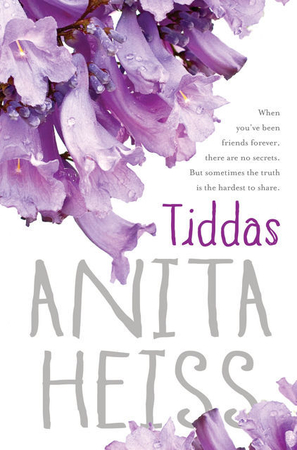
Book Review: 'Tiddas' by Anita Heiss

SubbannerIt seems apt during NAIDOC week to review Anita Heiss' new novel 'Tiddas'. I hadn't read any of Heiss' books before but I did have on my reading list her well received 2012 memoir 'Am I Black Enough For You'. Heiss writes a range of fiction and non fiction for adults and children. 'Tiddas' is her latest contemporary fiction, marketed largely towards women. I picked up a copy when I saw that Heiss was doing a talk at my local library and while I would not have normally gravitated towards this genre, I enjoyed it. Seeing the very genial and charming Heiss speak added to my appreciation for the novel.
As Heiss joked in her speech, her niche has been described by reviewers as 'chick lit featuring Indigenous chicks'. She is quite open in saying that she was looking for a gap in the market, and felt that the women's fiction she was reading did not reflect her experience as an Aboriginal woman. Her other novels, including 'Manhattan Dreaming' and 'Not Meeting Mr Right', were a great success, and good for Heiss, because I agree wholeheartedly that we need more diversity in main characters' ethnicity. I also enjoyed the fact that the main characters were women over thirty.
The novel centres around five women, three Indigenous and two white Australian, who have been friends since childhood growing up in Mudgee, New South Wales. The women are all close to, or turning forty, and are variously married, divorced, dating, pregnant or trying desperately to be pregnant. The novel moves back and forth through circumstance between their home town of Mudgee and their new homes in Brisbane: in fact, the best thing about this novel is the celebration of that city, which is rarely the feature of Australian fiction. Heiss lived temporarily in Brisbane to write this novel, and she paints the laid back city well for those who know it and those who would like to visit: 'On the way home after her usual nine-hour day, she'd stop at the Nepalese Peace Pagoda and feel the stress drain from her. If she felt strung out for any reason during the day she'd walk the length of the Grand Arbour and lose herself in the hundreds of bougainvilleas. It was too beautiful a place to remain angry or stressed'.
The women - Izzy, Xanthe, Ellen, Veronica and Nadine - hold their own book club to discuss novels, eat out, and catch up with each other. This conceit neatly brings the women together and allows them to discuss some larger issues while progressing the plot. The set up of the club, the references to Indigenous issues, and the exploration of some personal issues of the women - alcoholism, an unexpected pregnany, and infertility - feel a little forced in the first few chapters but once the reader is fully involved in the plot, the style of the novel flows more naturally. I was particularly glad that any stereotypes of single women, and Indigenous people, were avoided in this novel, and Heiss is contributing well to breaking down cliched literary portrayals. The novel is also resolved realistically which Heiss pointed out in her talk, as being personally important in showing real life to her readers.
The first standout character for me was Nadine, the novelist with a drinking problem, "As she grew more sober, Nadine was realising the incredible good fortune she experienced every day, unrelated to the actual fortune she had in the bank" - I can't pinpoint exactly why she felt like a strong character to me, but she had a bit of a hard edge that I found interesting. And the single Ellen, 'renodating' the hot chippies and electricians who came to renovate her house, was an engaging character as well. The title 'Tiddas' comes from the term meaning something close to 'sisters', your best female friends. It's a testament to the novel that when I finshed reading it, I immediately started looking in my diary to see when I could next see my own 'tiddas'. Heiss has negotiated with producers and sold the rights to 'Tiddas' to be made into a mini series: I think it will work very well on film and will fill another gap in that market.

*This review is part of the Australian Womens Writers Challenge 2014


http://auswomenwriters.files.wordpress.com/2013/12/awwbadge_2014.jpg

Tuesday, 8 July 2014

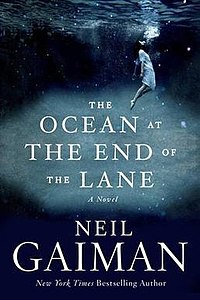
Book Review: 'The Ocean At The End Of The Lane' by Neil Gaiman

Ocean at the End of the Lane US Cover.jpg
It says much about Neil Gaiman’s writing that the first night I read 50 pages of his 2013 novel ‘The Ocean at the End Of the Lane’, I had a nightmare about a half man, half lizard repeatedly attacking me. No – there isn’t a lizard man in Gaiman’s novel but it certainly has some creepy characters and a chilling atmosphere. Gaiman is well known for creating other worlds that are unsettling, particularly in that they are inverting the concepts of our own world. Much of his work is seen through the eyes of a child protagonist or narrator, but the novels don’t feel like they are written for children or young adults. In this best-selling novel, the narrator is unnamed: a man who has come back to his childhood home for a funeral, and takes us back with him in time to age seven to remember the strange events that took place. The narrator lived on a rambling estate with his parents and his younger sister, who were completely normal. In this Gaiman novel, unlike his other best-seller Coraline where the parents were monsters, it is the neighbours and his new nanny who are the unusual element. On a farm next to the narrator’s home, three females (the Hempstocks) welcome him into their lives: young Lettie, eleven years old, and two older ladies who appear to be her mother and grandmother. The Hempstocks are soon revealed to possess strange abilities to transverse space and time: the narrator is taken into what seems another dimension by holding Lettie’s hand, and happens to pull back with him the monster of Ursula who becomes his nanny. Writing a synopsis of the novel makes it seem very simple, but it’s Gaiman’s imagination, and ability to create unsettling tension that makes his writing so popular, and evocative. And while the images are nightmarish, the characters have a quaintness that relieves the reader from the heavier material. The Hempstocks with their old style, rustic goodness are beautifully drawn, and the reader is made to feel as safe as the narrator when in their company. Lettie in particular with her adult wisdom is a charming character:
“Oh, monsters are scared," said Lettie. "That's why they're monsters. And as for grown-ups...' She stopped talking, rubbed her freckled nose with a finger. Then, 'I'm going to tell you something important. Grown-ups don't look like grown-ups on the inside either. Outside, they're big and thoughtless and they always know what they're doing. Inside, they look just like they always have. Like they did when they were your age. Truth is, there aren't any grown-ups. Not one, in the whole wide world.””
Likewise to Lettie’s wise adult voice, the narrator’s adult-remembering-childhood perspective is melancholic and insightful: “I do not miss childhood, but I miss the way I took pleasure in small things, even as greater things crumbled.”
To analyse this short novel any further would give too much away, but I would recommend dipping into Gaiman’s imaginary world: beware dreaming of lizard men at your own peril.